

3 Days in Lisbon – The Best Itinerary for First Timers
This post may contain affiliate links. When you purchase something through these links I may earn a small commission, at no extra cost to you. Learn more in my disclaimer policy. Many, many thanks for using these links!
If you’re planning on spending 3 days in Lisbon, then keep reading!
We loved our 3 days in Lisbon and felt really great about the choices we made. Our Lisbon visit came at the end of an 11 day road trip through Portugal, so we were happy to slow down a bit and wander. Yes, it’s a big city, but somehow, it felt more small-town, like we were guests in the locals’ home.
Lisbon’s history goes back over 3000 years. Ya, that’s really old! Originally settled by the Phoenicians in 1200BC, Lisbon is considered one of the oldest cities in Europe. As we roamed throughout the city, we learned about its history as a maritime center, its contributions to The Age of Discovery period in Europe, and why it’s still such a popular place to visit.
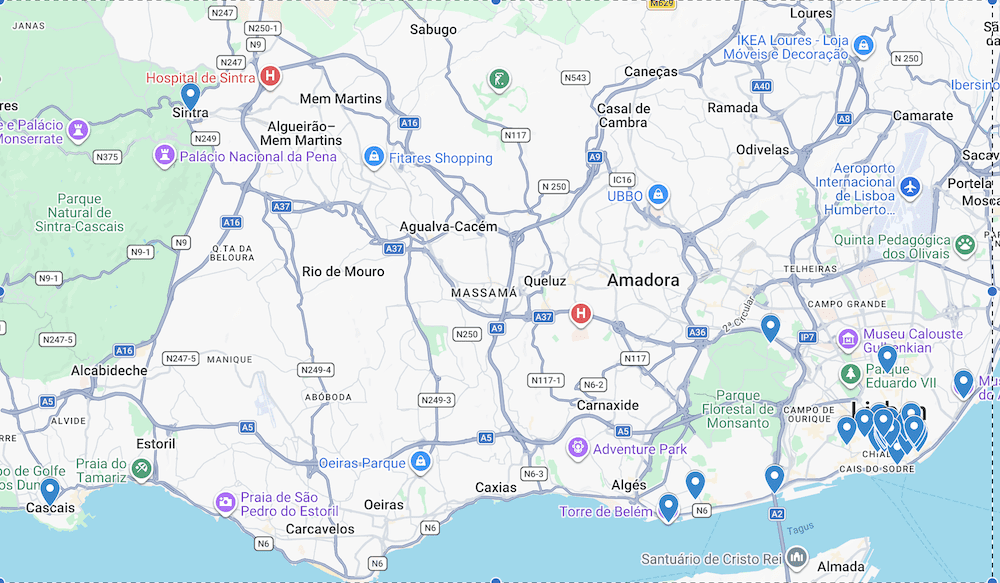
Check out this map of all the highlights on your 3 Days in Lisbon visit.
Carrie’s Quick & Easy Links
🌍 Flights & Hotels: I recommend Expedia
🏠 Vacation rentals: I recommend VRBO
🚘 Car Rental: I recommend Hertz
🌐 Tours: I recommend Viator
🛍 Gear: Check out my Travel Stuff
📷 Create Your Travel Memory Books with MILK
A 3 Days in Lisbon Itinerary
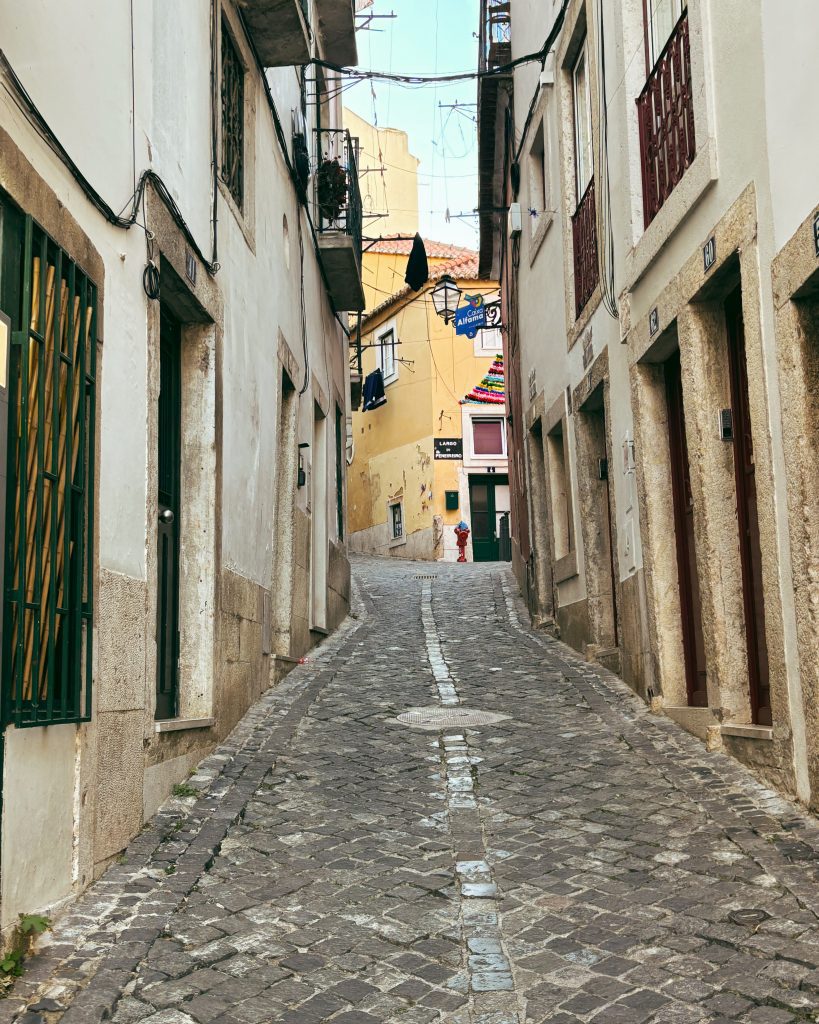
I’m sure you’ve seen pictures of the gorgeous tile work, the yellow trams, the narrow streets, and crazy steps and hills that overlook the Tagus River. As is the case with many ancient European cities, Lisbon was never built or designed on an organized grid. So, plan on getting lost – a lot! It’s called “The City of Seven Hills” for a reason. The millions of stairs are nothing compared to the uneven cobblestones – this means great walking shoes are critical! Be prepared!
Some of the highlights of Lisbon are the famous Fado music native to Portugal, the pastries, the views, the palace, and the churches and train stations covered in gorgeous hand painted blue tiles.
This itinerary covers the must-see sites while also including some fun stuff that you won’t want to miss!

Here’s a Little Summary of Lisbon Neighborhoods
Lisbon has distinct neighborhoods from the flats by the river and up into the hills. This is a little info about each area. We stayed in Alfama, which I recommend because we were so immersed in the most historic section. However, if you want something more modern and flat, then you’ll most likely be happier in the Baixa area.
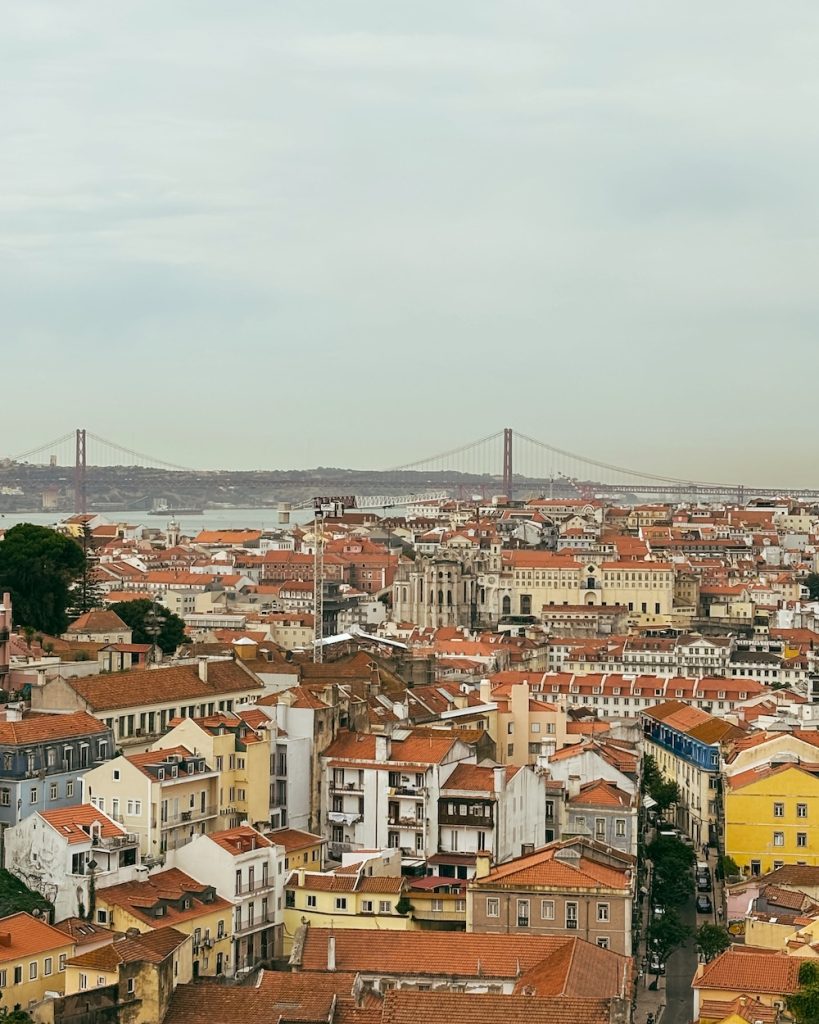
- Alfama is the oldest and highest part of the city, with narrow, winding streets, and plenty of hills and steps. Known for the views, the Castelo de São Jorge (St. George’s Castle), the ancient Jewish quarter (Judiaria), and home to Fado music houses. The famous yellow Tram 28 runs through Alfama.
- Baixa is the downtown center that was rebuilt after a major 1755 earthquake. These are the flat streets near the river, bustling with people in the plazas, shopping areas, restaurants, and the famous street Rua Augusta. This is a popular place to stay for first time visitors.
- Chiado is next to Alfama and is very central, but also very hilly. Many first time visitors also love staying here. This is a charming and colorful neighborhood with access to everything you’ll want to see and do.
- Bairro Alto is the neighborhood everyone describes as the hub of nightlife in Lisbon. Plenty of nightclubs, bars, and restaurants.
- Príncipe Real is described as a more trendy residential area with boutiques and great restaurants, lovely parks, and beautiful homes.
- Belém is a bit outside the city and is known for significant landmarks like the Jerónimos Monastery and Belém Tower.

➡️ Book This Top Rated Lisbon Walking Tour Here!
Day 1 of Your 3 Days in Lisbon: Walking Tour of Chiado, Baixa, and Alfama
Whether you find a Free Lisbon Walking Tour or join a private tour, spending the first day orienting to the city is always a great idea. The guides will not only take you to all the important sites, but they’ll also give you historic info that makes the visit much more rich and exciting. Below are some of the sites you’ll see on a tour – but breakfast first!

Breakfast Option
Café Nicolau
Praça Dom Pedro IV 24
In this historic square is the famous Cafe Nicola, an art deco coffee shop founded in 1787. There is outdoor seating, a full menu, and a lot of history here! I regret not stopping for a bite!
Chiado District Highlights
Luís de Camões Square
📍Praça Luís de Camões
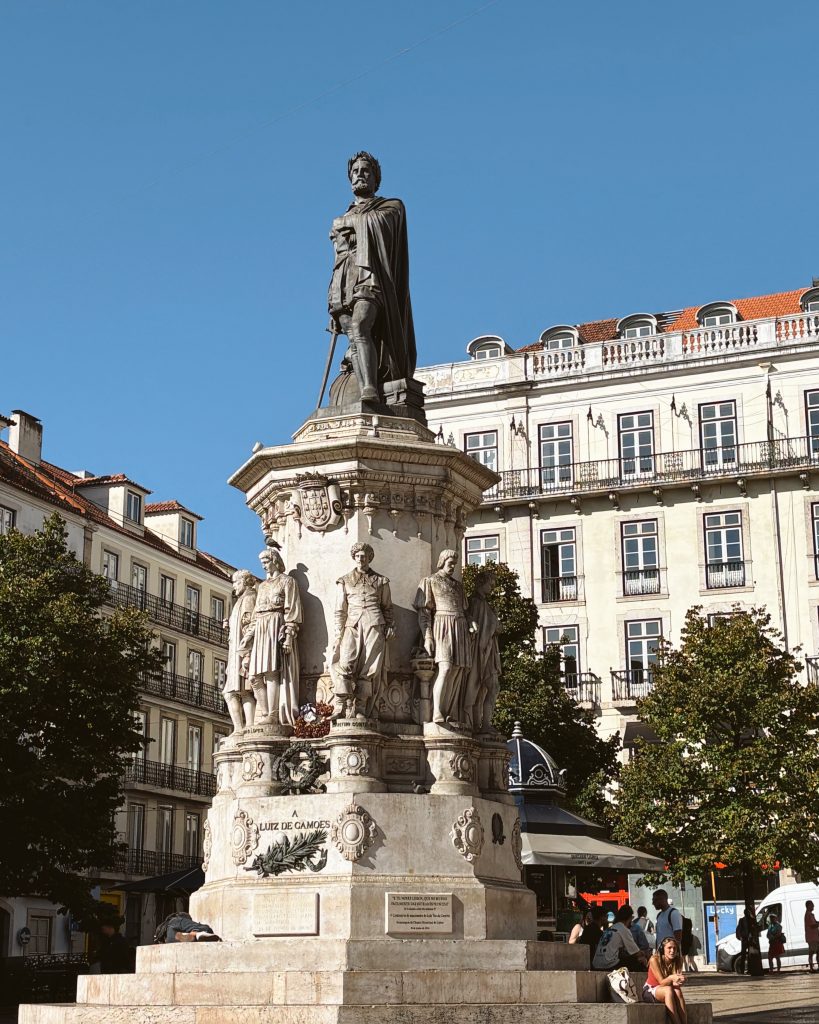
The central square is Praça Luís de Camões in the Chiado neighborhood. You can’t miss the 1867 monument with a statue of Luís de Camões, a poet in the center, surrounded by eight other national treasures of Portuguese culture from the Age of Discovery.
Livraria Bertrand
📍Rua Garrett 73–75
Daily from 9:00 a.m. to 10:00 p.m.
Admission is free
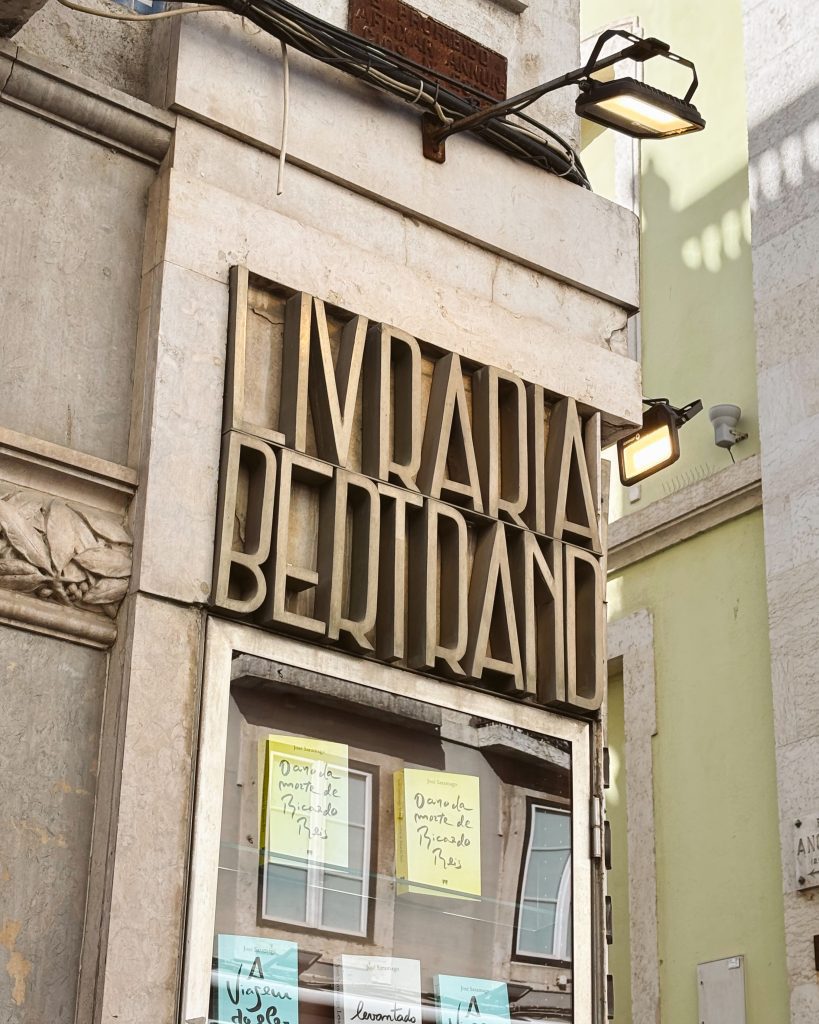
As you explore the neighborhood’s cafes, bookstores, and shopping, you’ll see the world’s oldest bookstore. Founded in 1732, the Guiness Book of World Records has declared it the world’s oldest book store.
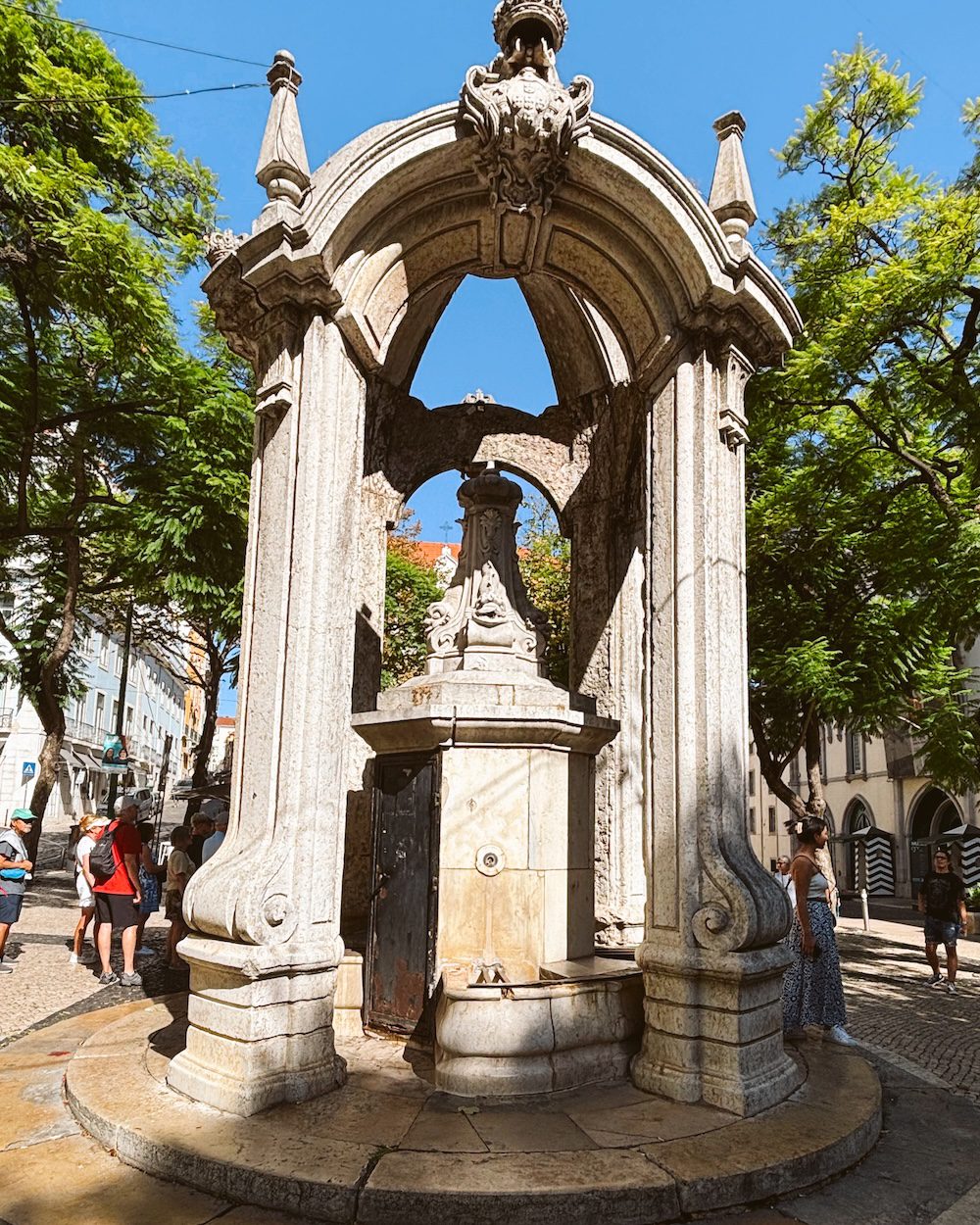
Largo do Carmo & Convento do Carmo
📍Largo do Carmo
Walk less than 5 minutes up to the Largo do Carmo Square. This is one of the prettiest squares in central Lisbon that sits up above the Santa Justa Lift. (All the lifts were closed when we visited as it was just days following the tragic accident on the Ascensor da Glória.)
Not only is the Largo Do Carmo notable for its structure and the convent, but it is most recently known as the place where the Carnation Revolution came to a peak. This is where the Portugal dictator surrendered on April 25, 1974.
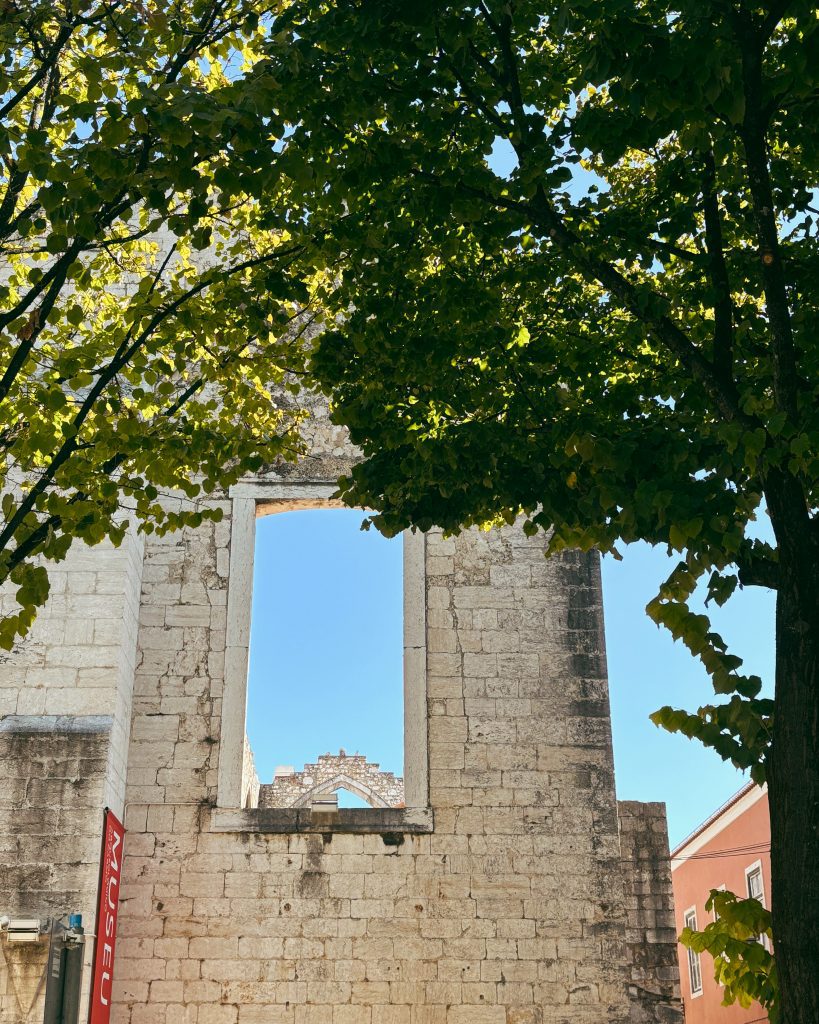
Museu Arqueológico do Carmo
📍Largo do Carmo
Monday to Saturday from 10:00 a.m. to 6:00 p.m. in November to April
Until 7:00 p.m. in May to October. Closed Sundays.
On the square are the remains of the Convento Do Carmo. This 14th century Gothic convent was destroyed in the 1755 earthquake. It remains roofless and has become a museum.
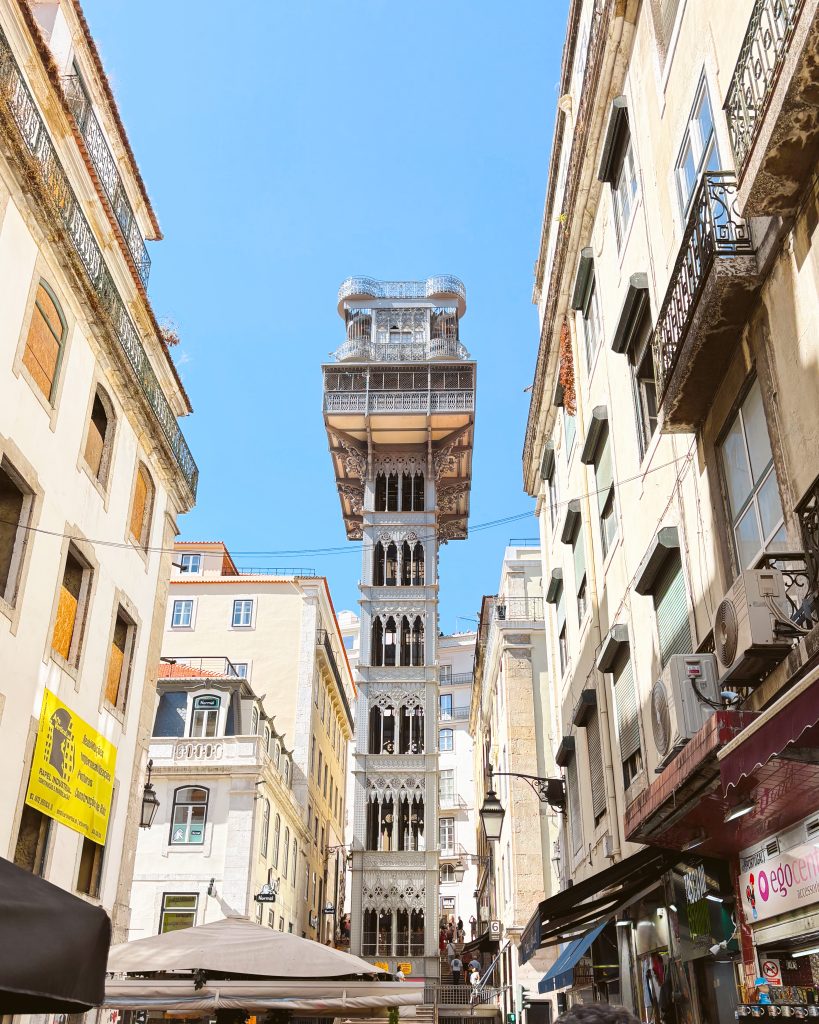
Elevador de Santa Justa & other Lisbon Lifts
📍R. de Santa Justa
In the late 1800s, engineers designed lifts and funiculars in the city to make it easier for people to access places high up. Sadly, because of a tragic accident in 2025, and the age of these systems, they have all been closed for repair.
The Elevador de Santa Justa is a vertical elevator that connects the lower Baixa to the upper Chiado. There are also Funiculars which are small cable cars that climb the steep streets:
- Glória connecting Restauradores to Bairro Alto
- Bica connecting the river to Bairro Alto
- Lavra connecting Avenida da Liberdade to Torel

Praça Dom Pedro IV Square
📍Praça Dom Pedro IV
Down the hill is the Praça Dom Pedro IV, also called Rossio, which is one of Lisbon’s main squares.You can’t miss the famous wave pattern of the square’s floor. The square includes the column of “The Soldier King,” Pedro IV of Portugal, surrounded by 4 women representing Justice, Wisdom, Strength, and Moderation.

D. Maria II National Theatre
📍Praça Dom Pedro IV
The National Theater, in the Praça Dom Pedro IV Square, was founded in 1842 and built to replace the Estatuus Palace which used to house the offices of the Portuguese Inquisition. Although Jews fled the Spanish Inquisition to the safety of Portugal, in 1497, they were forced to become “new Christians” and were blamed for the plague and killed. These events triggered the Office of the Inquisition.

Rossio Railway Station
📍Praça Dom Pedro IV
Next to the National Theater sits the Rossio Railway Station built in 1887. This is a very ornate building in the Neo-Manueline style, with a clock on top. This is the train station you can use to get to Sintra.

Largo de São Domingos
📍Praça Dom Pedro IV
The Largo de São Domingos historic square in central Lisbon is where the São Domingos church stands. This is the site of the 1506 Holy Week Massacre of Lisbon’s Jews began. Here, you’re likely to see a cart selling the popular Portuguese cherry liquor, Ginjinha. (I wasn’t a fan, but you should definitely try it!)
➡️ Book This Super Popular Lisbon Food & Wine Walking Tour
Baixa de Lisboa District Highlights
Continue to walk down into Baixa, Lisbon’s downtown district that was rebuilt after the 1755 earthquake. When this neighborhood was reconstructed, it was laid out in a grid, unlike the rest of the city. It has wide streets and neoclassical structures. It’s very busy and popular for shopping and dining.

Arco da Rua Augusta
📍Rua Augusta
Daily from 10:00 a.m. to 7:00 p.m., with last entry at 6:30 p.m.
Ticket price is listed at €3.50
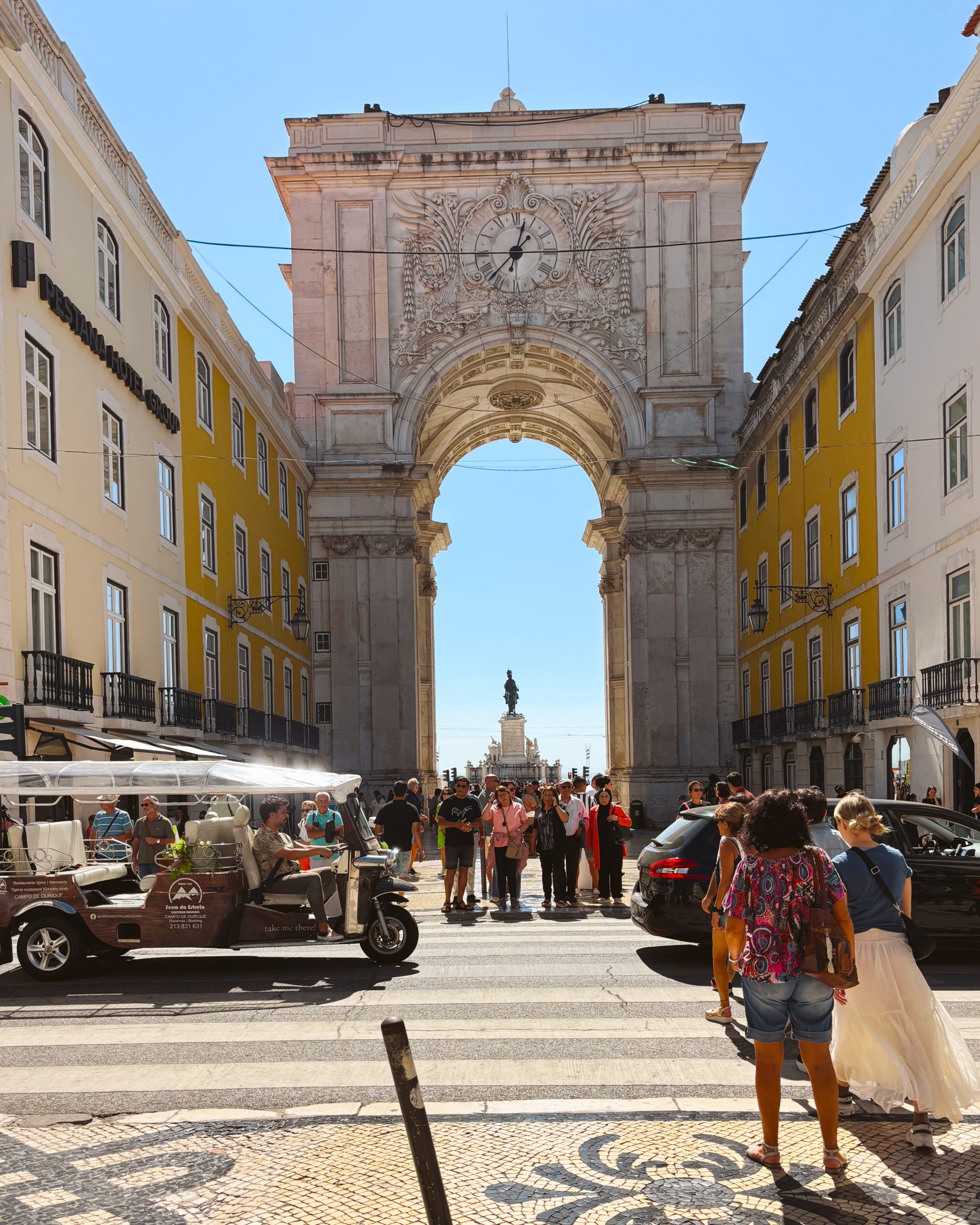
Rua Augusta is the main pedestrian avenue in the Baixa neighborhood. At the end of the walk is the majestic Arc da Rua Augusta leading into the Praça do Comércio. The arch represents the rebuilding after the earthquake. You can visit the top viewpoint for a small admission fee.
Praça do Comércio
📍Praça do Comércio
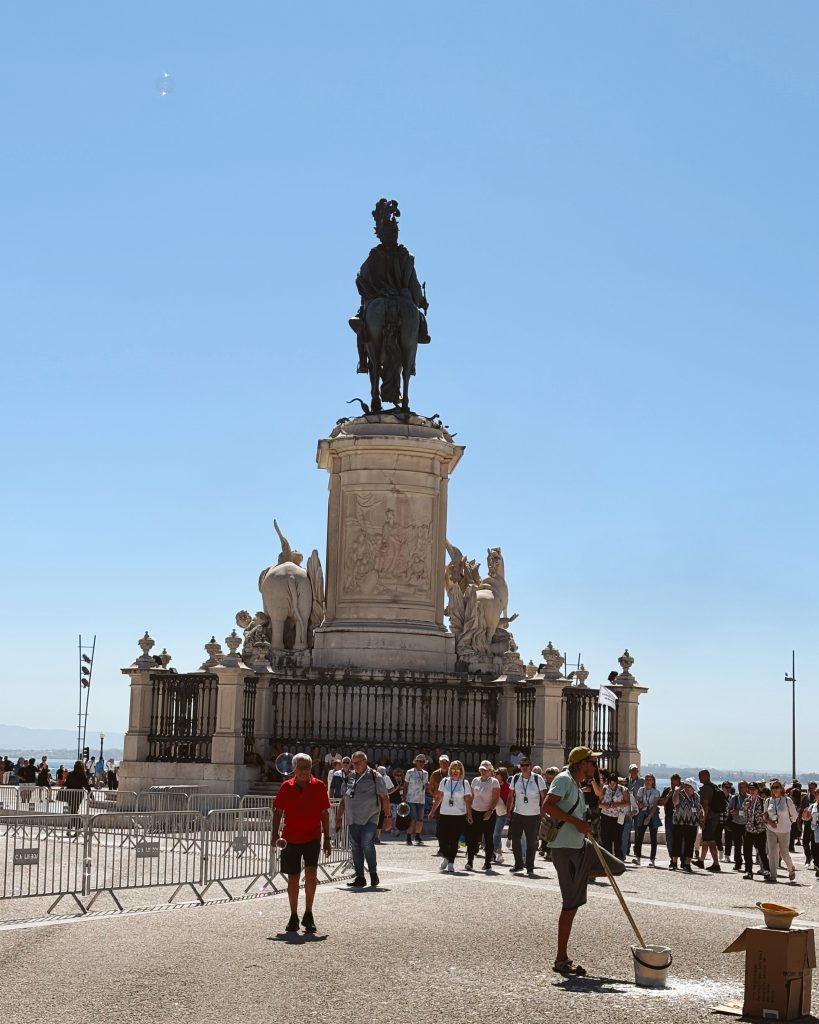
Praça do Comércio is one of Lisbon’s most famous and biggest squares. It opens up right onto the Tagus River and is a great spot for hanging out, people watching, taking photos, and maybe catching a special event.
Rua dos Bacalhoeiros & Casa dos Bicos
📍Rua dos Bacalhoeiros
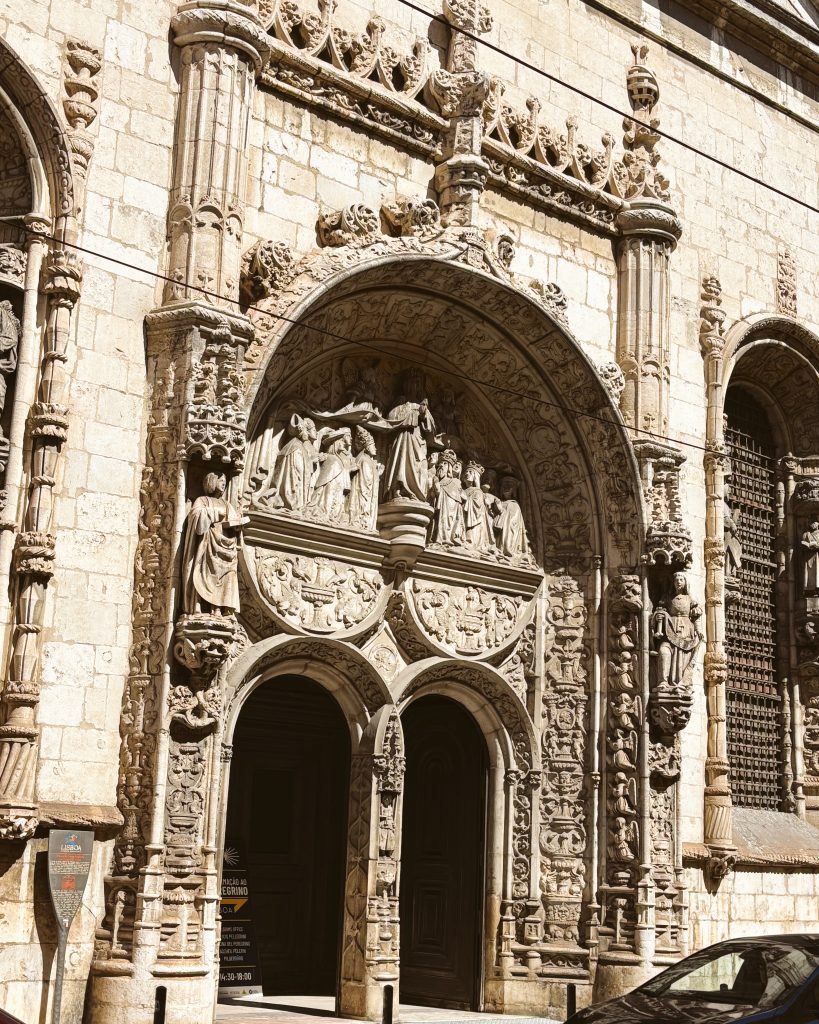
Walk along the Square by the water and begin the climb into Alfama. Walk toward Rua dos Bacalhoeiros and find Casa dos Bicos, an unusual building with a very unusual facade of pointed stone cone shapes.

Alfama District Highlights
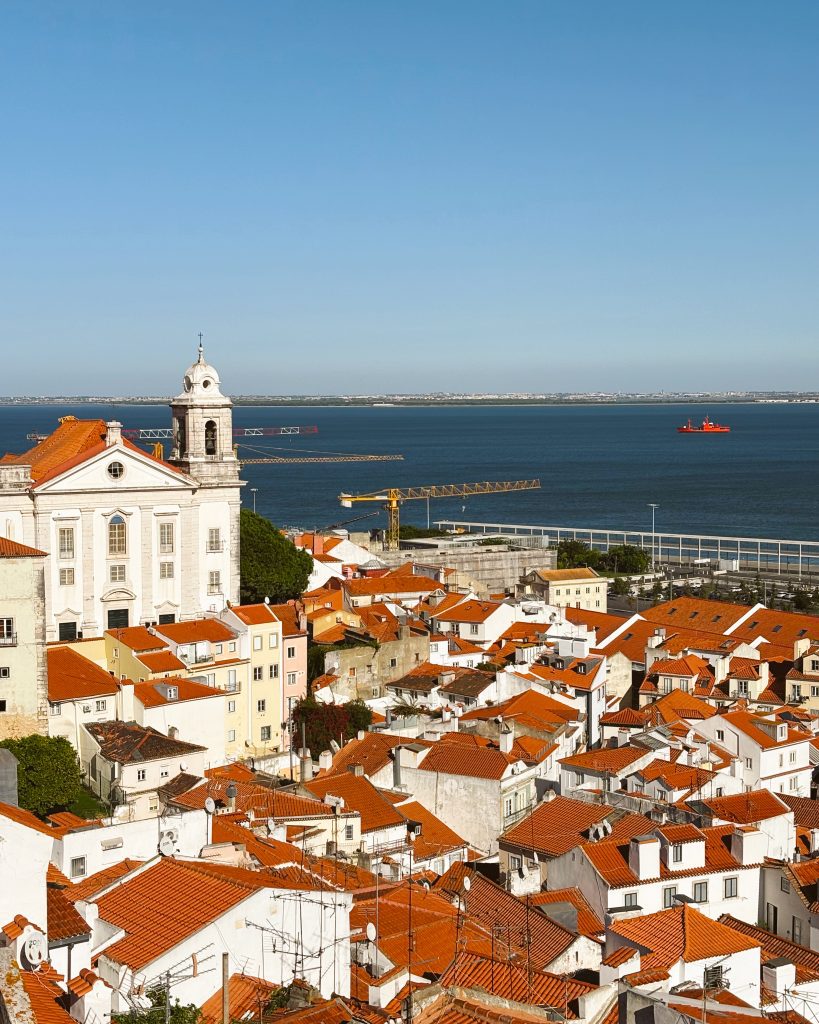
As you climb through Alfama, away from the river, you’ll be in Lisbon’s oldest neighborhood which was largely untouched by the 1755 earthquake. The streets are narrow, winding and are often connected by stairways. We stayed at the Pousada Alfama, so we spent a lot of time wandering in Alfama.
Lisbon Cathedral
📍Largo da Sé 1
Open Monday to Saturday, 10:00 a.m. to 6:00 p.m.
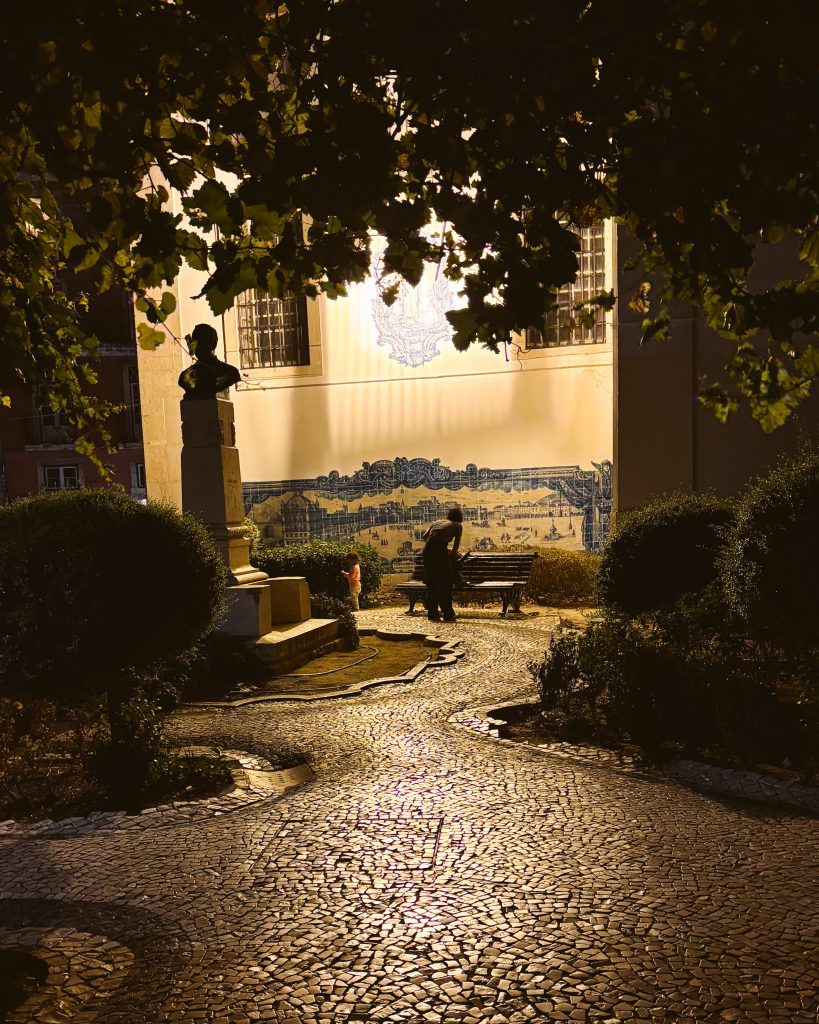
While in Alfama, stop at Sé de Lisboa, the Lisbon Cathedral, the Cathedral of Saint Mary Major, or just called Sé. It’s the city’s oldest church in Lisbon, built in 1147. Its Romanesque architecture survived several earthquakes.
➡️ Book A Private Half Day Lisbon Tour Here!

Day 1 Dinner & Fado
Alfama is one of the best places in Lisbon to hear Fado, which is the traditional Portuguese music style rooted in women longing for their men who have gone off to sea. It’s about storytelling, it’s improvisational, and when done well, it’s magnificent.
São Miguel de Alfama
📍Rua de São Miguel, 9, 11, 15, 17
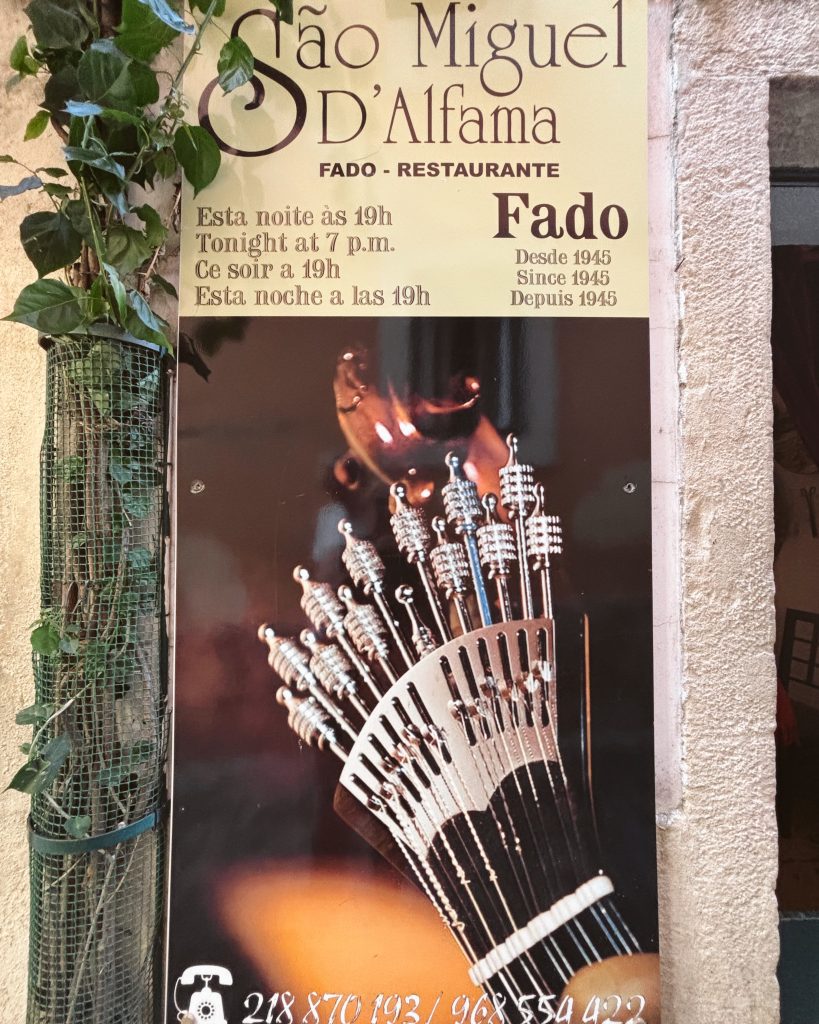
One of our most treasured experiences was a dinner and Fado house that we happened upon by chance. Tucked in an alley in the Jewish quarter is a restaurant that is owned by a Fado singer, whose mother owned it before her, and now her son and peers are the performers. We really lucked out, let me tell you! The meal was massive, the atmosphere very cozy and authentic, but the quality of the musicians and singers was unbelievable. (My husband is a professional musician, so we are pretty particular about these things and this show was amazing!!!)

Tasca do Chico
📍R. do Diário de Notícias 39
If you’re looking for a more casual Fado experience that does not include a sit down dinner, then go to Tasca do Chico. It’s a fun atmosphere, filled with flags and photos of Portuguese legends. Pub food and live music until 2 AM!
Day 2 of 3 Days in Lisbon – The Castle, Tram 28, Miradouras, & Azulejos
Day 2 is an opportunity to really explore more of Alfama and see the castle on the hill, some of the famous viewing points, and enjoy the iconic Tram 28 ride. You’ll also have time to revisit some of the important sites you saw on Day 1, and to wander into tile making shops, pastry shops, and sit for a glass of wine overlooking the city.
Breakfast Option
Dear Breakfast Alfama
LG de Santo António da Sé 16
➡️ Book This Skip The Line Guided Tour of Castelo de São Jorge
Castelo de São Jorge (St. Georges Castle)
📍R. de Santa Cruz do Castelo
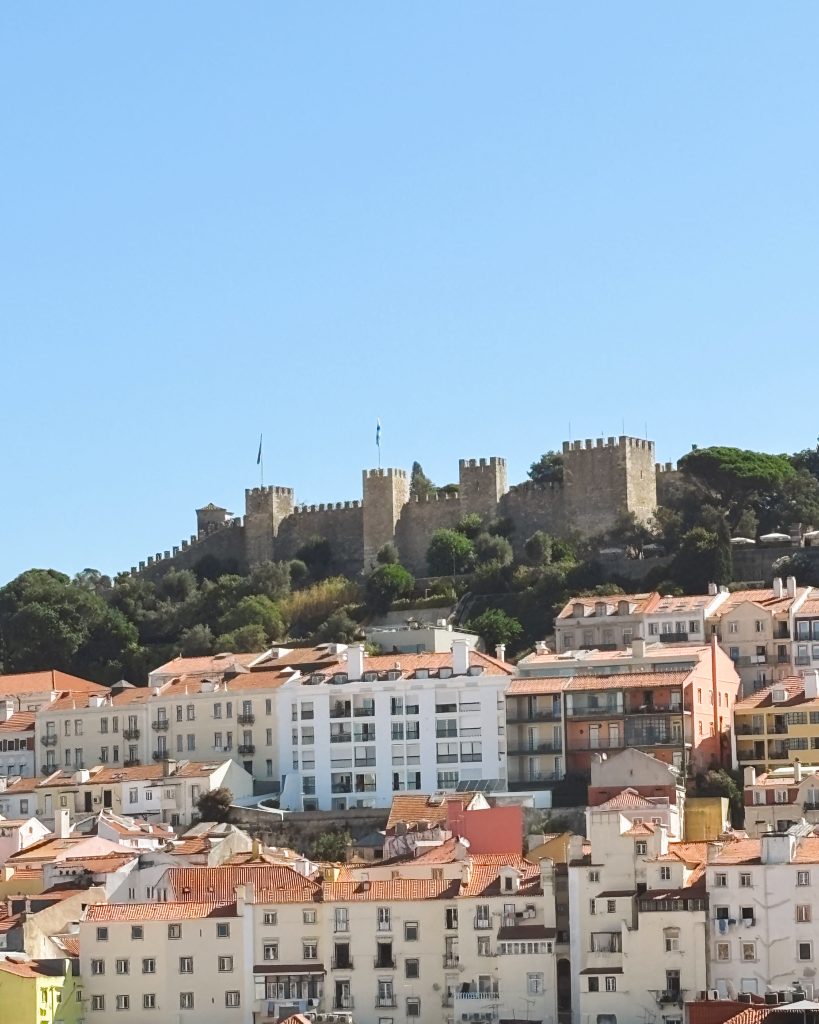
This massive medieval castle and fortress atop the highest point in Lisbon is one of the city’s most significant sites. It’s an archeological site with history dating back to the year 1248. A visit to the castle will give you information about its religious, political, and military importance. You can tour the grounds, see incredible views, and even see Lisbon through the Camera Obscura.
Get tickets in advance. There was a very long line at the entry when we went – and that was a random weekday morning in September. We did not expect it would be that busy.
Please check the website for ticket prices and hours because they sometimes change.
Daily 9:00 a.m. to 9:00 p.m. with last admission at 8:30 p.m. Winter hours vary.

Tram 28
📍Martim Moniz
Try to fit in a ride on Tram 28 on this day. Tram 28 is Lisbon’s most famous yellow tram, built in the 1930’s, that passes through some of the city’s most colorful neighborhoods. It’s a very popular activity and might be crowded. If you have to stand, you might not be able to see the neighborhood sites through the windows as well.
What to Know about Tram 28
- The tram begins at Martim Moniz, near the city centre and continues out to Campo de Ourique with many stops along the way. If you get on at one of these starting points, you’re likely to get a seat, but you can hop on at any of the stops.
- The full ride is about 45 minutes.
- The current cost of Tram 28 is €3.70.
- You can pay on board with credit card or cash.
- You can purchase a Navagente card to pay in advance, which will cost you less per ride.

Miradouros (Viewpoints)
The scenic viewpoints throughout Alfama are certainly highlights for taking pics and creating memories. The 3 main Miradouros in Lisbon are:
- Miradouro de Santa Luzia: Largo de Santa Luzia.
- Miradouro das Portas do Sol: Largo das Portas do Sol.
- Miradouro da Graça: Largo da Graça.

Azulejos (Traditional Portuguese Tiles) Options
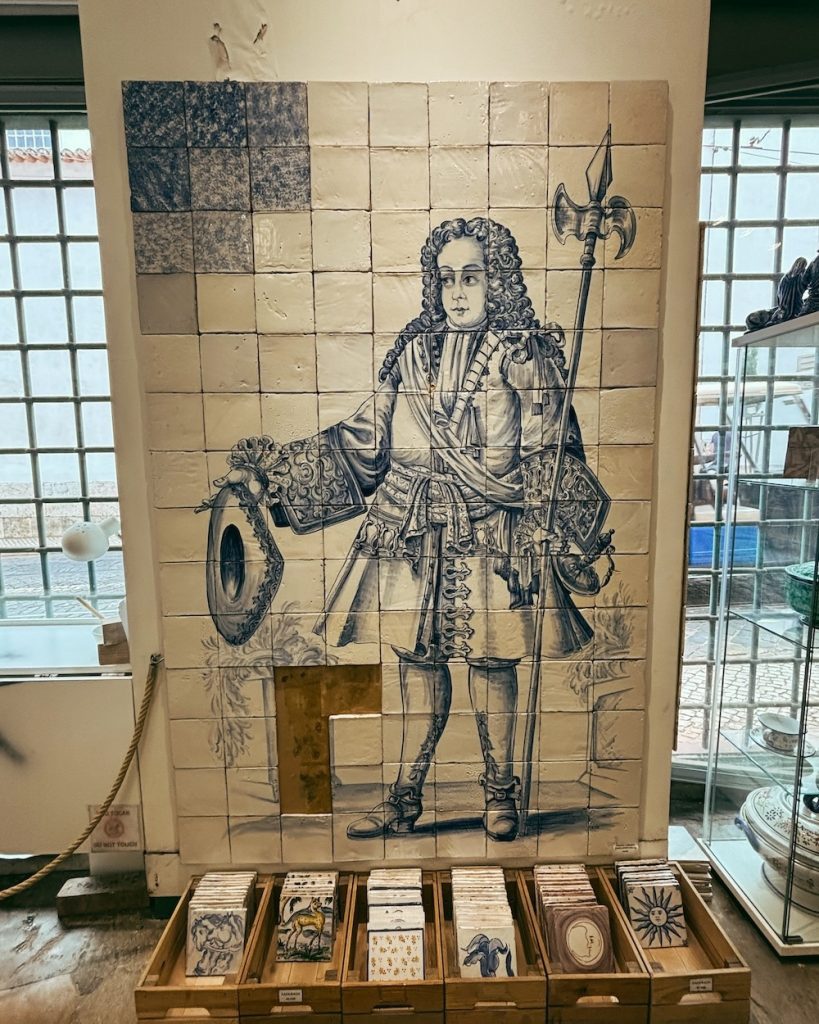
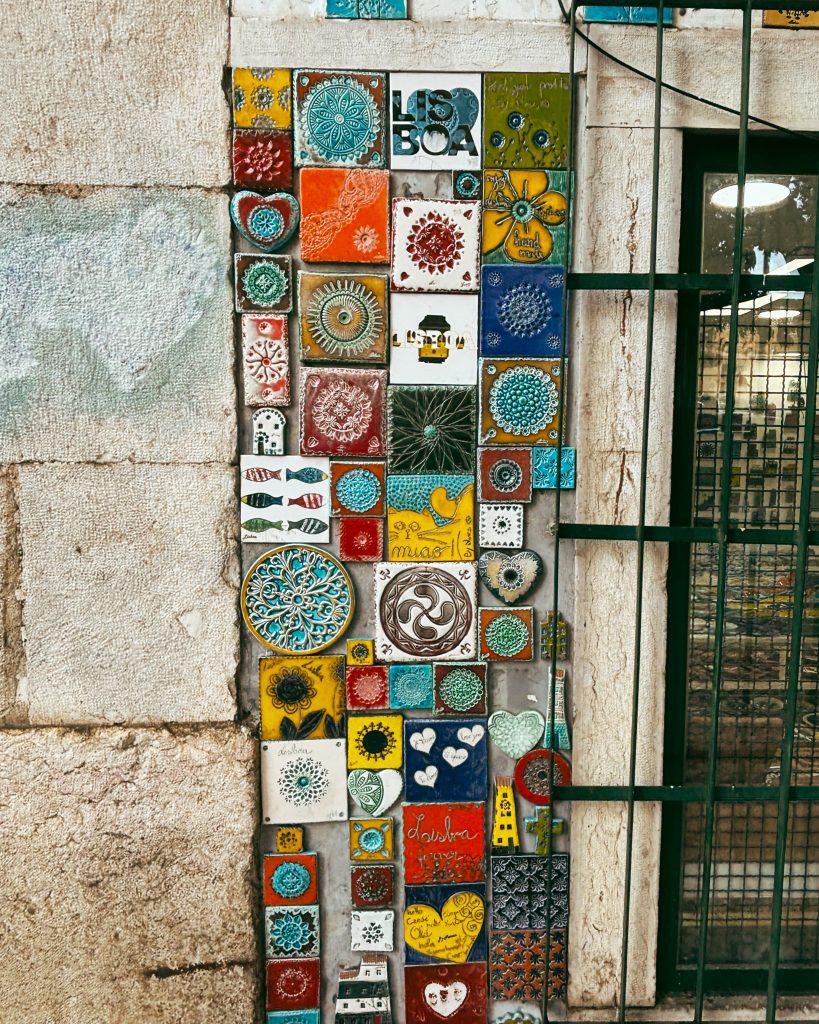
You may find yourself obsessed with the gorgeous Azulejos, the Portuguese tiles you’ll see on and inside many buildings in Lisbon. (Just wait until you get to Porto!). So, below are some options for some tile touring.
Palace of the Marquises of Fronteira
📍Largo São Domingos de Benfica 01
This very famous 17th century palace is about a 20 minute drive from the city center, in the Benfica district. It’s known for its unique tile panels in the rooms and gardens. We didn’t have the time to visit, but tickets are available on location. See the Fronteira website for more details.
Convento dos Cardaes
📍Rua de O Século 123
Open 10 am – 5pm with the last entry at 4:30.
Tickets are available on site
This convent was established in 1681 for the order of Carmelite Nuns and has famous tiled panels and a gilded altar. The Carmelite order strictly limits contact with the outside world and the architecture of the convent reflects that. The convent is still a working convent today that houses women with special needs.
São Bento Palace (Parliament) *Not to be confused with the Sao Bento Railway Station in Porto!
📍Praça da Constituição de 1976
The São Bento Palace, today’s Parliment building, was built in 1598 in the Estrela district. It became a monastery, and houses beautiful azulejos as part of its very grandiose interior and architecture.
National Tile Museum
📍R. Me. Deus 4
This museum is temporarily closed for renovation, but keep checking, because there’s no opening date indicated and maybe it will be open when you visit! I was disappointed it wasn’t open when we visited. The museum is located in a 16th-century convent, and is considered THE location to see historical and artistic tile panels.
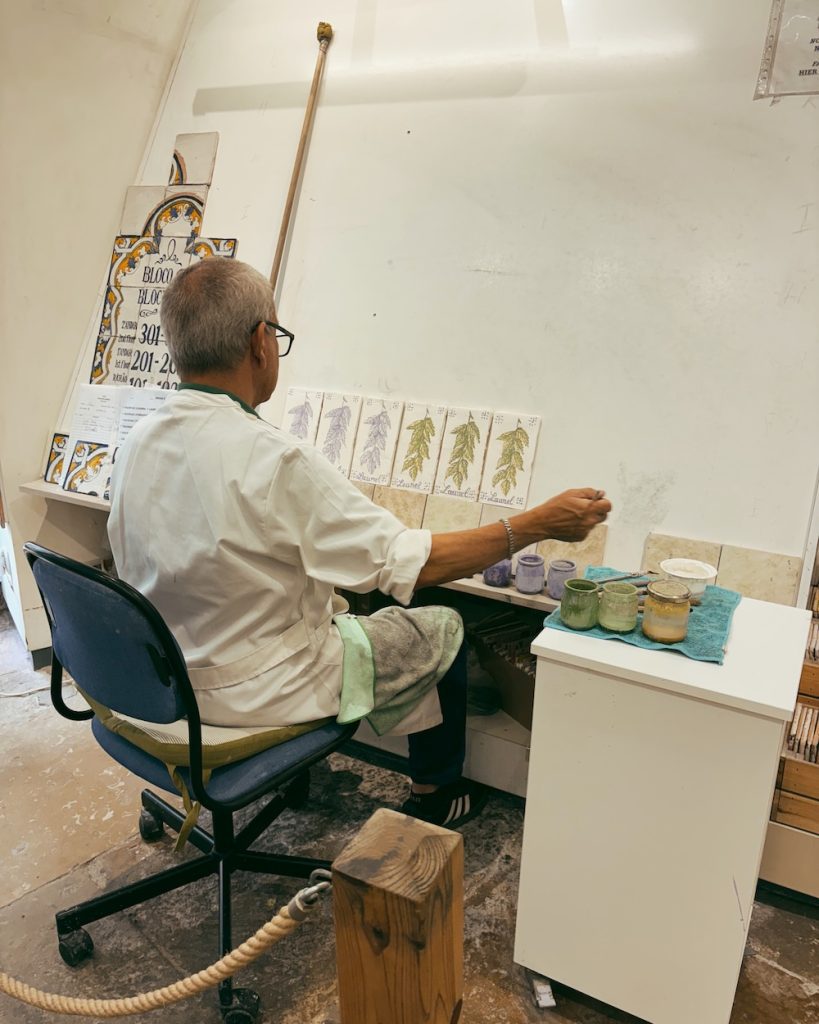
I also recommend that you wander into some of the tile stores. We watched a tile painter at work in Alfama and its was fascinating. I wanted to buy everything in the store!
XVII Azulejos e Faianças
📍Largo de Santa Luzia nº9
Day 2 Dinner
La Joya Cantin
Rua da Cruz dos Poiais 79
A cute bistro with Argentinian cuisine. Vegetarian and Gluten Free options.
Leonetta
R. da Rosa 321
Cozy, laid back pasta and wine bistro. Vegetarian and Gluten Free options.
➡️ Book This Top Rated Small Group Tour to Sintra & Cascais Now!
Day 3 of 3 Days in Lisbon – Sintra & Cascais Day Trip
Day 3 is for a day trip outside of the city to two of the most popular towns in the Lisbon region. You have choices here – a DIY tour day, joining a group tour, or hiring a private guide for the day. You could easily spend a whole day in either Sintra or Cascais, but since we didn’t have an extra day, we decided to combine them, which is also a popular way to go.
PRO TIP:
I need to mention that we thought we had this day trip planned well, but things got a bit challenging! In retrospect, It would have been worth it to hire a private tour guide for the day, or to book a group tour. This day trip adventure requires a lot of transportation needs, thus having a private driver/tour guide would have made the day a lot less complicated.
DO NOT rent a car for this excursion. While driving to Sintra and Cascais could be easy, driving IN Sintra and trying to park would be your biggest nightmare.
Why Sintra & Cascais?
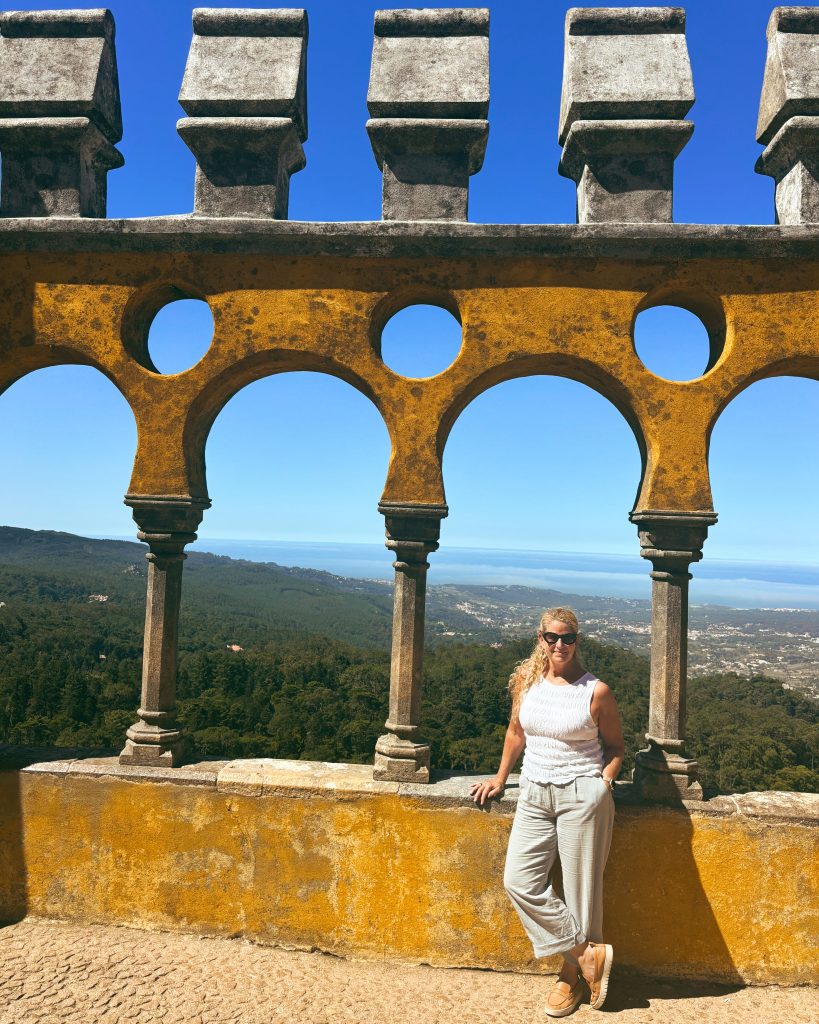
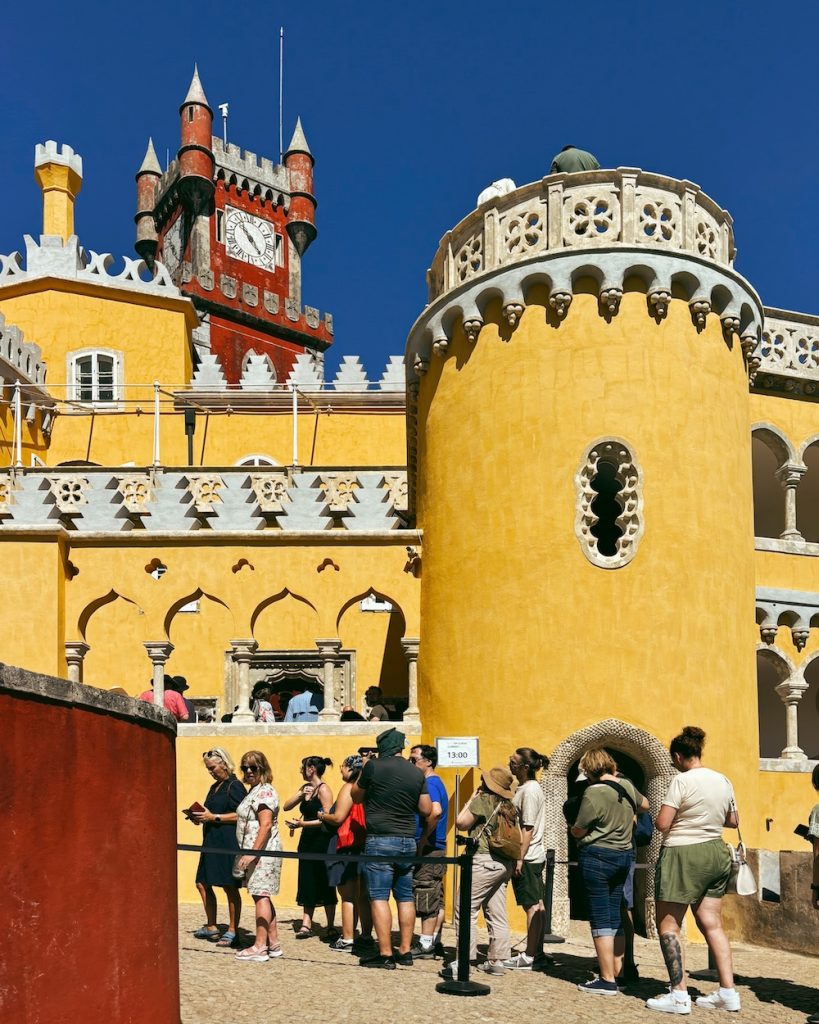
Sintra is the beautiful town northwest of Lisbon. It’s often described as a fairytale town set in a lush forest hillside, honestly, it’s more like a mountain. It can be misty and foggy as well as hot and sunny. Sintra was THE place for Portuguese royalty and the wealthy to spend their summers. So, it’s home to some of the most beautiful castles, mansions, and of course, the most famous Pena Palace.
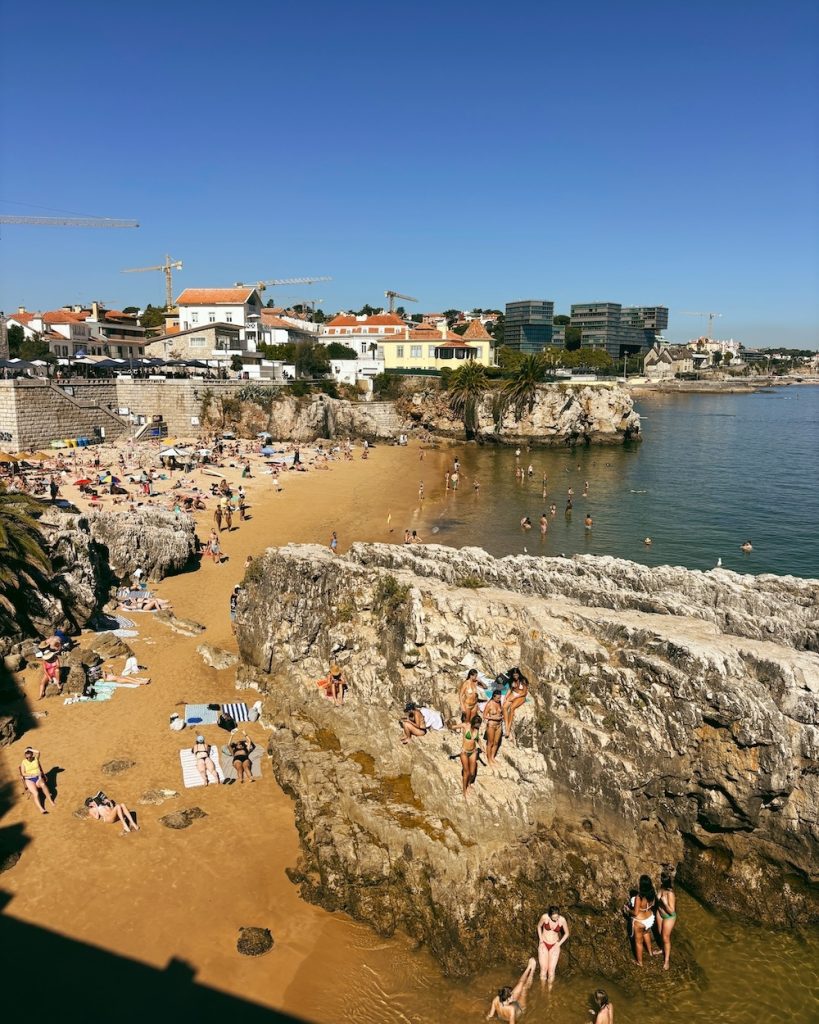
Cascais is a Beautiful, laid-back, Portuguese coastal town, just about 30 minutes from Lisbon. It used to be a fishing village but became a summer escape for royalty . Today, it’s known for unique beaches and rock formations, fun shopping, good food, and a fun hang out for a younger crowd.
Things to See in Sintra
📍Palacio da Pena (Pena Palace)
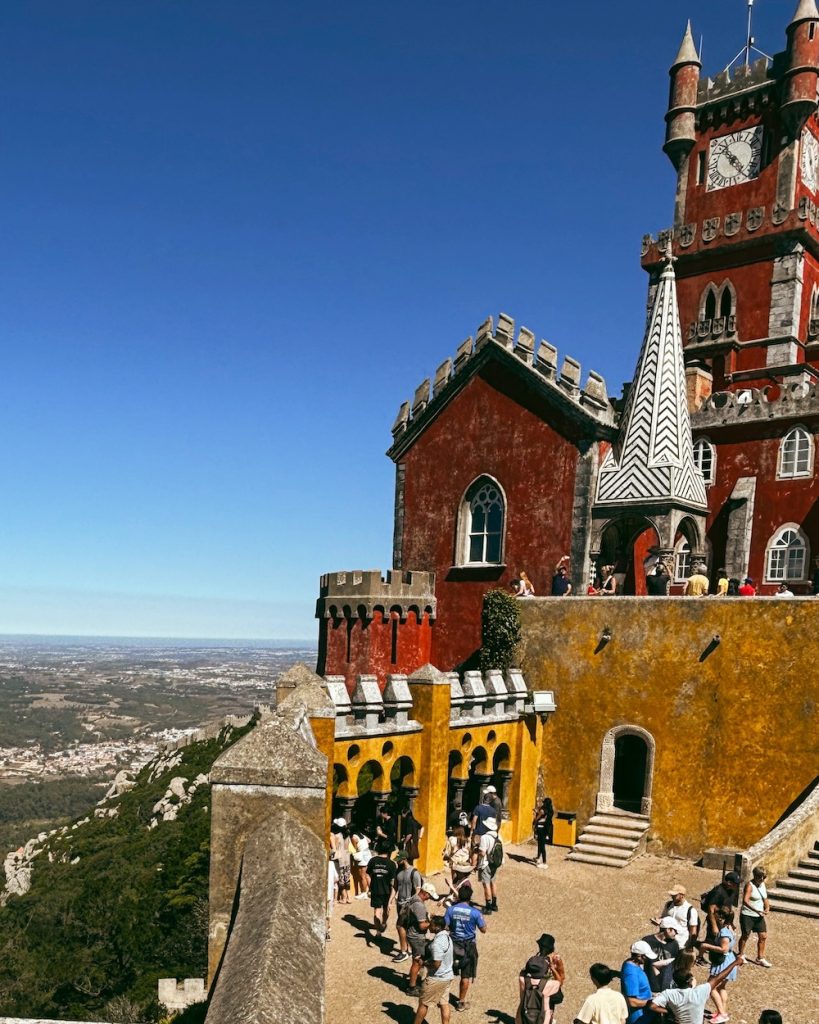
This is the most famous and dramatic of the places to see in Sintra. This is the bright yellow and red palace at the very top of the Sintra hill. It’s a UNESCO World Heritage Site, and is one of the “Seven Wonders of Portugal.” Definitely the main attraction of Sintra. Expect long lines for the Palace exterior and interior. What’s referred to as “gardens” are the forest, wooded areas surrounding the palace with lovely paths, and small ponds. Tickets are available on line and at the castle. Buy in advance for discount and convenience.
📍Castelo dos Mouros (Moorish Castle)
Built in the 8th Century by the Moors, these medieval ruins are now home to an archeological exhibit museum. This is a 10 minute walk down from Pena Palace and also has incredible views.Tickets are available on line and at the castle. Buy in advance for discount and convenience.

📍Palácio Nacional de Sintra (Sintra National Palace)
This is the palace built with two giant kitchen chimneys. It sits right in the town center surrounded by simple gardens. It was the royal residence for over 500 years and is well preserved. You can buy tickets on site to tour the interior.
📍Palácio de Monserrate (Monserrate Palace)
If you get back on the 434 bus you can take it down to this palace built in 1790. It was designed with influences from Moors, Gothic, Indian, and Florentine. It is known for its large dome and exotic gardens.

📍Quinta da Regaleira
This unique villa was built by an Italian designer named Luigi Manini. He was big on secret societies and symbolism, so the place is filled with cool tunnels, gardens, and a famous spiral staircase, the Initiation Well.
📍Seteais Palace Palácio Hotel
This luxury hotel in Sintra, built in 1783, was formerly the mansion of Dutch royalty and is now a gorgeous venue for tourists to stay and available for events like weddings. Please invite me if you get married here!

Things to See in Cascais
📍Praia da Rainha (Rainha Beach) & Praia da Duquesa (Duquesa Beach)
These are both great beaches close to the center of town.
📍Cascais Marina
The marina is lovely and an easy walk.
📍Praia da Conceição (Conceição Beach)
This is the larger, sandy beach that is great for swimming.
📍Santa Marta Lighthouse
This is a picturesque blue and white striped lighthouse south of the center of town. Built as part of the Fort of Santa Marta in the 1600’s, it’s a great photo spot.
📍Boca do Inferno
A 20 minute walk from the center of town is the Boca do Inferno. It’s a dramatic hole in a rock formation that causes waves to hit the rocks, making it the “Mouth of Hell.”
How to Visit Sintra & Cascais On Your Own
- Take an early train from Rossio Station in Lisbon to the Sintra stop, about 40 minutes. The trains run about every 30 minutes. I recommend getting an 8AM train to have the best shot at beating the many busloads of tourists that overwhelm Sintra later in the morning.
- As you exit the train in Sintra, you’ll be at the lowest part of the city. You’ll need transportation up to the town center, and then it’s even much higher up to the Pena Palace. Along the way, there are plenty of mansions, gardens, and views, etc. But you’ll want to see Pena first and then work your way down. Trust me on this.
- As you exit the train, you’ll see stops for the 434 Tourist Bus that runs on a one direction loop from the train station up to the Pena Palace, and back down. While it’s just 1 km from the train station to Pena Palace, the bus route is 10 km long because it winds through to the different stops. You can buy a single ticket or a full day hop on hop off ticket. €3.90/ €6.90 for the day. DO THIS!

The bus makes stops at:
- Sintra Estacio Train Station
- Sao Pedro de Sintra
- Lago Ferreira Castro
- Castelo Dos Mouros
- Palacio da Pena
- Sintra Villa
- Sintra Estacio
4. DO NOT take a TukTuk, Uber, or Taxi because the cell service isn’t great, you’ll have to wait a long time for them to arrive, the traffic is crazy hideous, and they may overcharge you. If you choose to walk, know that it is a very steep climb and may take at least an hour.
5. After you visit the Pena Palace, wander the gardens, take your iconic photos, then begin your descent. You can choose to stop at the Moorish Castle, in the town center for lunch and shopping, see the National Palace, and continue down to the bus station. Or hop on the 434 for a ride back down.
6. Once back to the Train Station, you can take a bus to Cascais. There’s not a train to Cascais. You’ll find the Portela de Sintra Bus Terminal and take the 1620 or 1623 bus for a 25 minute ride to Cascais.
7. What we did – We called an Uber to meet us in the parking lot area below the Pena Palace to drive us to Cascais. It was a long wait for the Uber driver to get to that lot. However, it was not that expensive and was totally worth it. Given the heat, the crowds, how hungry we were, and all the things that had gone wrong that day, we were not up for any more challenges.
8. To return to Lisbon, we took another Uber from Cascais. However, you can walk to the Cascais train station and take a train back to Lisbon. It’s very inexpensive and the trains run every 20 minutes.
9. On the drive back, you’ll pass the Belem Tower and Monastery and the 25 de Abril Bridge. If you have time and energy, you could be dropped off to see these sites.
Lisbon Add-Ons
If you have an extra day or want to mix it up with the 3 Day Lisbon Itinerary, here are some other sites to explore:
• 25 de Abril Bridge
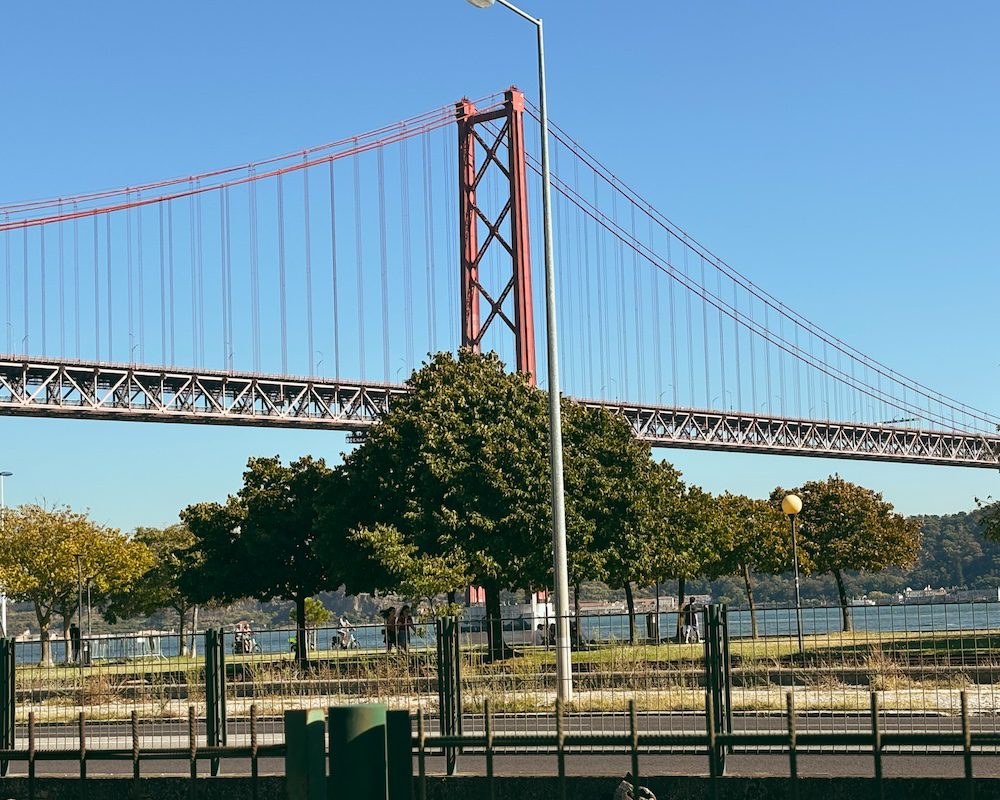
You will have seen the famous bridge from the viewing platforms in Lisbon. As a resident of San Francisco, seeing this replica of the Golden Gate Bridge, is very exciting. This bridge is of historic significance because it’s named for the day of the independence uprising and revolution in Portugal. This is not a pedestrian bridge and don’t feel like you need to see it up close, from afar is enough!
• Belem Jeronimos Monastery
Open Tuesday – Sunday 9:30 a.m. to 5:30 p.m., last entry 5:00 p.m
The ticket office closes at 4:30 p.m. General admission is €18. Closed Mondays and some holidays.
The Belem district is the western side of Lisbon, along the Tagus River, about 5 miles from the city center. The Belem Jeronimos Monastery from the 16th century, is one of Lisbon’s most important monuments and is a UNESCO World Heritage site.
• Belém Tower
Tuesday – Sunday, 9:30 a.m. to 6:00 p.m., ast entry at 5:30 p.m.
The Belém Tower is a16th-century riverside fort built between 1514 and 1519 to help defend Lisbon’s harbor. It’s a UNESCO World Heritage site as a distinct example of the Manueline architecture style.

• The Lisbon Roman Galleries
The Roman Galleries were something I wished I had known about long in advance of us visiting! These underground tunnels are only open to the public for one or two days per year! We happened to be there on the day they were open, but obviously it was all sold out.
In 1771, years after the 1755 earthquake, this “cryptoporticus” system was discovered underneath the downtown area. They are a series of support structures that were created to help build on the slopes. They were later used as a water cistern for the residents of the district, so people are only allowed in to tour when the water table is low and has been pumped out to make it safe to be inside the galleries.
Day 3 Dinner
La Fiorentina
R. de São Pedro de Alcântara 65
Popular Italian restaurant with great pizza. Vegetarian and Gluten Free options.
Honest Greens
R. Ivens 44
This world wide chain is known for its delicious, beautiful, and healthy meals. Vegetarian and Gluten Free options.

Where to Stay in Lisbon
➡️Budget Choice
Hotel M’AR De AR Auria is a highly rated hotel with excellent reviews and close to the Metro.
➡️ Budget Choice
Rossio Plaza Hotel is a highly rated hotel in an excellent location, walking distance to St. George’s Castle.
➡️ Mid Range Choice
Pousada Alfama is a very beautiful hotel in a fabulous location. The rooms are very small however, so be aware.
➡️ Luxury Choice
Hotel Avenida Palace is a very beautiful hotel in a fabulous location. The rooms are very small however, so be aware.

Lisbon FAQ’s
When is the Best Time to Visit Lisbon?
Honestly, Lisbon is great to visit any time you can get there! But if you’re looking for best weather combined with lower crowds and prices, then spring (March–May) and fall (September–October) are best.
Is 3 days enough time to visit Lisbon?
Yes, 3 days was enough time to see the major sites, explore the neighborhoods, and even to take a day trip to Sintra and Cascais. A 4 day visit would give you a more relaxed experience.
What food is Lisbon famous for?
Lisbon (Portugal in general) is all about the fish, mostly cod. Here are the must try foods:
- Ginjinha – cherry liqueur
- Grilled sardines & bacalhau (salted cod)
- Bifana (pork sandwich) & prego (steak sandwich)
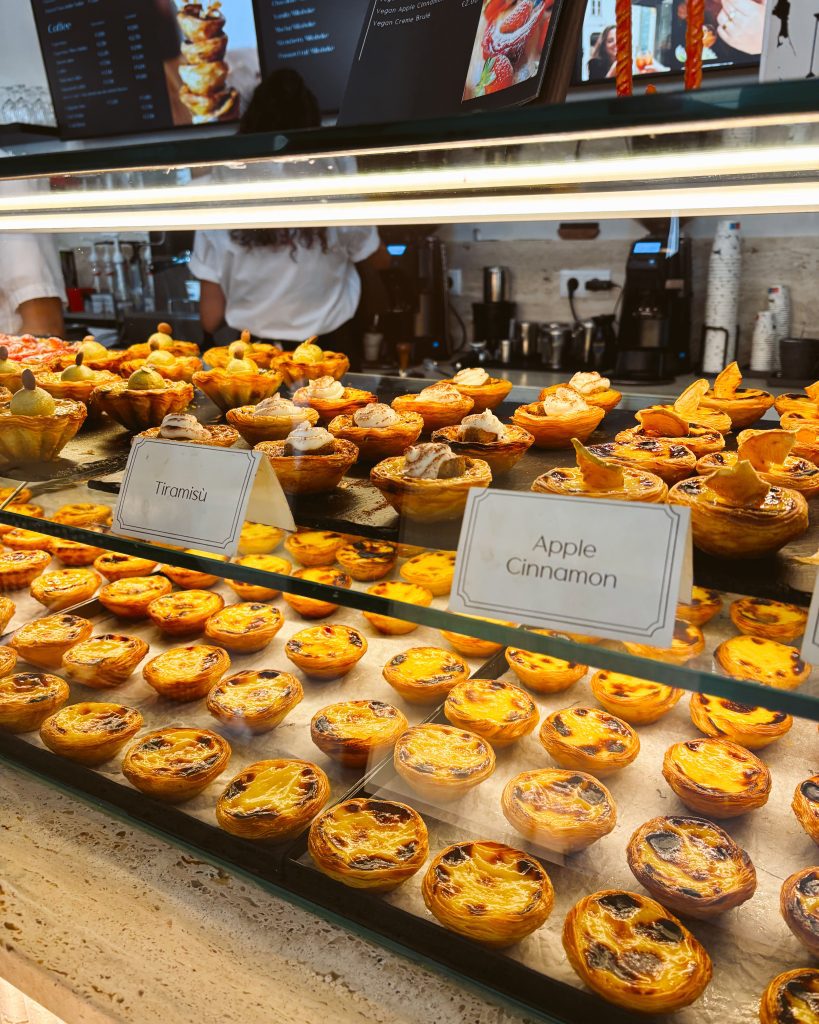
- Pastel de nata (custard tart)
Now you’re all set with the best 3 days in Lisbon Itinerary.
In a nutshell…
Our Lisbon experience was really excellent and I can understand why people rave about it, and about Portugal in general. We felt very welcome, safe, and immersed in the culture. In spite of it being such a popular tourist city to visit, Lisbon is very much a locals’ town. It was very clear to us that people who live there are very proud of the rich history and culture of their city.
Lisbon is an intense walking city with its hills and steps, but that gives you the full flavor of what it’s like to live there. And walking helps you see all the beautiful details of architecture and color that make Lisbon so inspiring.
Add Lisbon to your Bucket List vacations and as part of your Portugal travels. I’m sure you’ll agree it’s worthy of the list!
xx,
Carrie
